4 min read
The cycle-symptom connection — understanding how you feel across your cycle
Your symptoms aren't random. They're a calendar. Every mood shift, every craving, every burst of confidence — they all have a hormonal explanation, and a...
Your symptoms aren't random. They're a calendar. Every mood shift, every craving, every burst of confidence — they all have a hormonal explanation, and a phase name.
The Science
Your menstrual cycle is governed by four hormones: estrogen, LH, progesterone, and FSH. They rise and fall in a predictable rhythm — and every shift changes how you feel, how you think, how your skin looks, and how much energy you have.
Most women are never told this. They experience mood swings, fatigue, or sudden clarity and assume it's personality — when it's actually physiology. Understanding your cycle is the most powerful thing you can do for your hormonal health.
Phase 1 — Menstrual Phase (Day 1–7)
Your body is asking to rest, not perform
Estrogen and progesterone hit their lowest point, signalling the uterine lining to shed. Prostaglandins — inflammatory compounds associated with cramping — tend to be highest on days 1–2. For Vata types, irregularity hurts most here. For Pitta types, inflammation dominates.
You feel:
- Fatigue and a need to withdraw — this is physiological, not weakness
- Lower comfort threshold — associated with prostaglandins and low oestrogen
- Heightened intuition as external noise drops with hormones
- Bloating peaks on day 1, then eases by day 4
Support this phase:
- Warm sesame oil self-massage — reduces Vata, soothes cramps
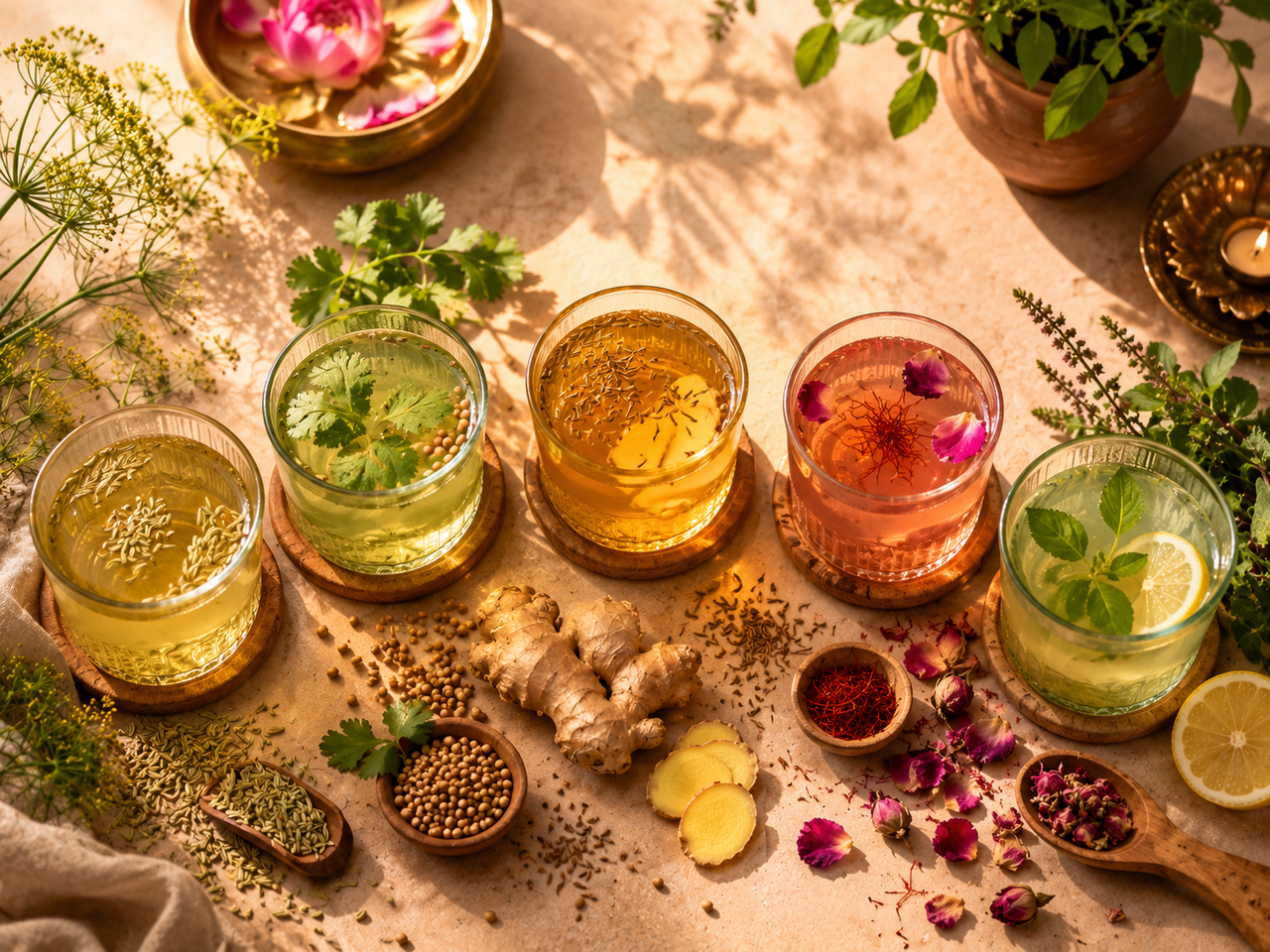
- Ginger and fennel tea morning and evening
- Reduce screens and intense exercise on days 1–2
Phase 2 — Follicular Phase (Day 8–13)
Rising estrogen means rising energy and clarity
The pituitary releases FSH, prompting follicles to develop. As the dominant follicle grows, it releases increasing estrogen — which is why most women feel their best here. Cognitive sharpness, motivation, and social energy all rise together.
You feel:
- More mental clarity and creative ideas than any other phase
- Higher physical stamina — this is your peak workout window
- Social and outgoing — rising estrogen is associated with improved mood and motivation
- Skin at its clearest and most hydrated
Support this phase:
- Lighter, fresh foods — sprouts, leafy greens, cooling herbs
- Coriander seed water first thing — traditionally supportive for Pitta types in this phase
- Ideal window for new projects, decisions, and strength training
Phase 3 — Ovulation (Day 14)
The LH surge — and why you feel magnetic today
The LH surge triggers ovulation — the mature follicle ruptures and releases an egg. Estrogen peaks just before, with testosterone also rising alongside. This is the 24–48 hour window when most women feel most attractive, communicative, and physically capable. It is not a coincidence — it is biology.
You feel:
- Magnetic, confident, and unusually expressive
- Many women notice their voice feels richer and more resonant
- Pain tolerance is at its highest — great time for intense workouts
- Slight mid-cycle cramping is normal — brief, one side only
Support this phase:
- Saffron and warm milk the evening before your peak window
- Light movement only on day 14 — ovulation is energy-intensive
- Ideal for important conversations, presentations, and creative output
Around ovulation, LH rises significantly, and many women notice feeling at their most energetic and expressive. Understanding this pattern means you can plan your life around your peak, not against it.
Phase 4 — Luteal Phase (Day 15–28)
Progesterone rises — and so does your sensitivity
The corpus luteum produces progesterone, which calms the nervous system and prepares the uterine lining. If no pregnancy occurs, both hormones drop sharply around day 26, often associated with pre-cycle symptoms. Vata: anxiety, insomnia. Pitta: anger, skin flares. Kapha: bloating, low mood.
You feel:
- Early luteal (Day 15–20): calm, nesting, detail-oriented
- Late luteal (Day 21–28): irritable, bloated, emotionally raw
- Food cravings — especially carbs — are associated with mood shifts in this phase
- Breast tenderness and water retention as progesterone peaks
Support this phase:
- Ashwagandha for Vata or Shatavari for Pitta in warm milk at night
- Reduce caffeine in late luteal — worsens anxiety and tenderness
- Warm, cooked, grounding foods — avoid raw salads from day 22
Your BodyType changes everything
Two women, same cycle day — completely different experiences. Your Dosha shapes which phase hits you hardest, and what you need.
- Vata is most sensitive during menstrual days 1–7. Rest, warmth, and oil are your medicine.
- Pitta often notices inflammation patterns in late luteal days 22–28. Cooling herbs and reduced heat are supportive.
- Kapha often notices heaviness through the luteal phase days 15–28. Movement and lightening the diet from day 20 tends to support this pattern.
Your cycle is not an inconvenience. It is the most intelligent rhythm your body knows.